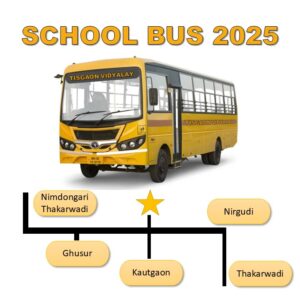
SCHOOL BUS
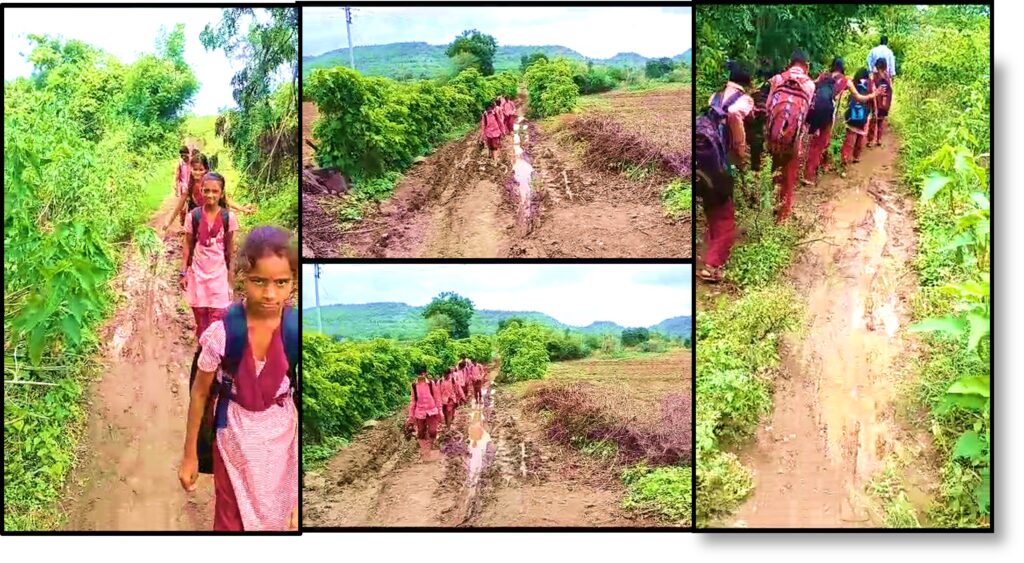
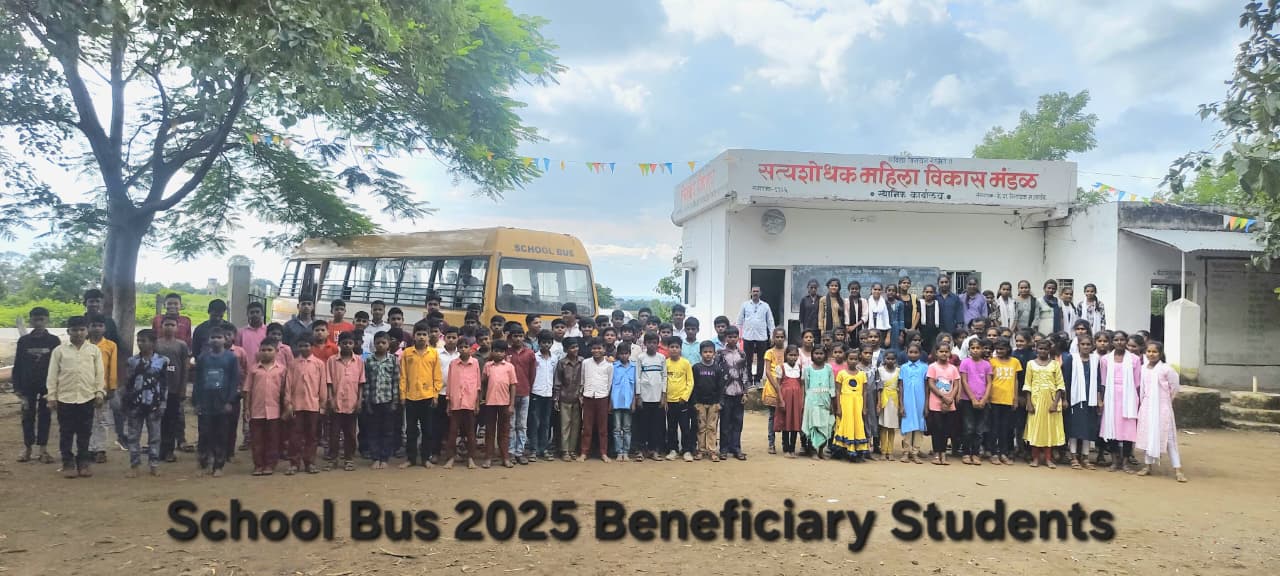
Join us in proven Rural transport into "A permanent Asset". Together, we eliminate muddy tracks, unsafe forest long walks for 154 tribal students.

97 vulnerable girls safely commuting daily across 8 remote hamlets.
minimizing the transit times and ensure 95%+ student attendance
Driven through treacherous rural terrain.
Underprivileged, extreme remote villages with no public transport
Project Scope, Strategy & Observed Impact
🎯Project Aim
Ensure safe, reliable daily transport for tribal students to improve school regularity and learning outcomes.
Project Aim
Ensure safe, reliable daily transport for tribal students to improve school regularity and learning outcomes.
To ensure safe, reliable daily transport for tribal school-going children so that they can attend school regularly and achieve better learning outcomes.
đź“‹Project Objectives
All-season attendance • Overcoming terrain • Girl safety • Community empowerment
Project Objectives
All-season attendance • Overcoming terrain • Girl safety • Community empowerment
- Ensure regular school attendance of tribal students across all seasons (rain, summer and winter).
- Overcome severe geographic barriers (hilly terrain, muddy tracks, river and forest paths) that currently block access to school.
- Provide a safe, dignified commute for girls, reducing exposure to unsafe and isolated routes.
- Contribute to community empowerment by enabling first-generation learners to complete schooling and progress to higher classes.
👥Target Beneficiaries
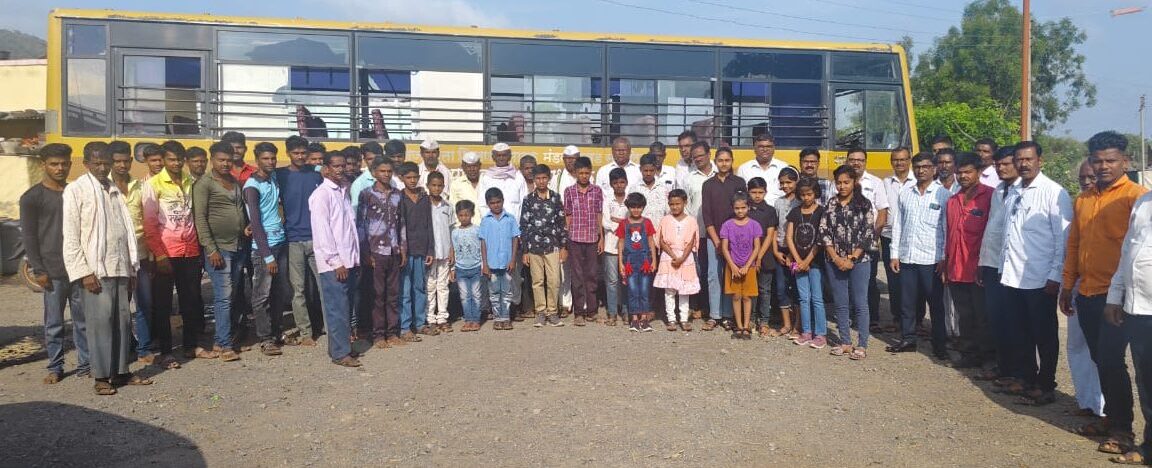
154 Tribal Students
Target Beneficiaries
154 Tribal Students
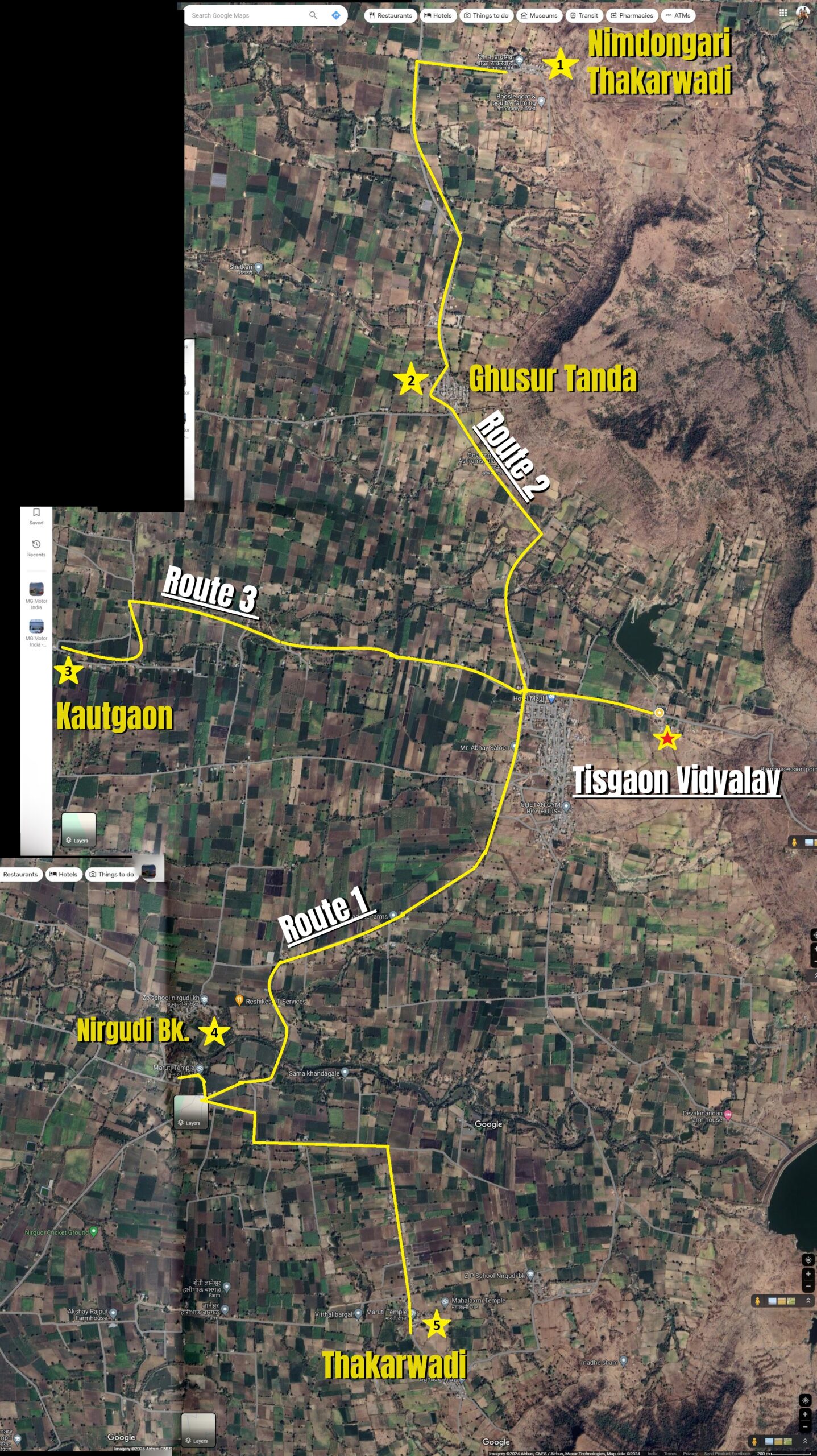
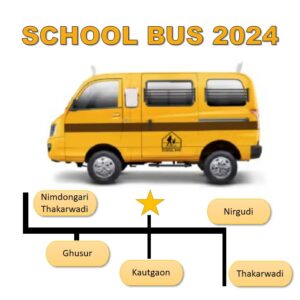
- 154 tribal students from landless and low‑income families in 8 villages/hamlets .: Nirgudi (Thakarwadi), Nirgudi, Ghusur, Ghusur Tanda, Nimdongari (Thakarwadi) and Kautgaon, Bhilwadi and Chavan Wasti Tal. Khultabad, Dist. Chhatrapati Sambhajinagar (formerly Aurangabad), Maharashtra.
- Boys and girls in primary and secondary grades, 10–16 years of age, studying in government/aided schools in this cluster.
⚠️Context and Need (Methodology / Problem)
4–8 km daily walk • No Public Transport • 1–1.5 ft monsoon mud • Dense Forest • 2–3 hrs daily time loss
Context and Need (Methodology / Problem)
4–8 km daily walk • No Public Transport • 1–1.5 ft monsoon mud • Dense Forest • 2–3 hrs daily time loss
- For these students, daily one‑way distances of 3–7 km on foot through hilly, uneven terrain significantly reduce regular attendance and lead to chronic fatigue.
- During monsoon, kutcha paths turn into 1–1.5 feet deep muddy stretches, often with thorny bushes and unsafe edges, making it practically impossible—especially for younger children—to reach school safely and on time.
- Many girls report feeling unsafe walking alone through isolated forest stretches and river crossings, which directly affects their willingness to continue schooling beyond upper primary.
- The absence of any public or school transport means that even highly motivated students lose 2–3 hours every day in walking, arriving tired and less able to concentrate in class.
🚍Implementation Approach
Active Since June 2024
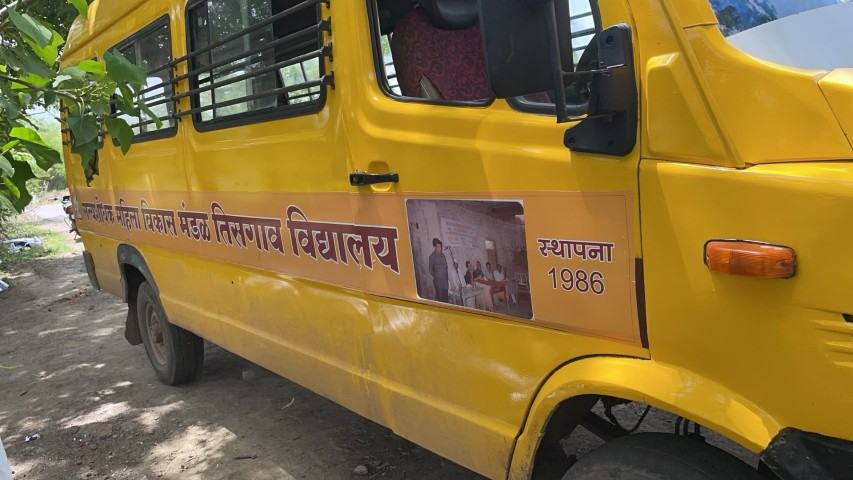
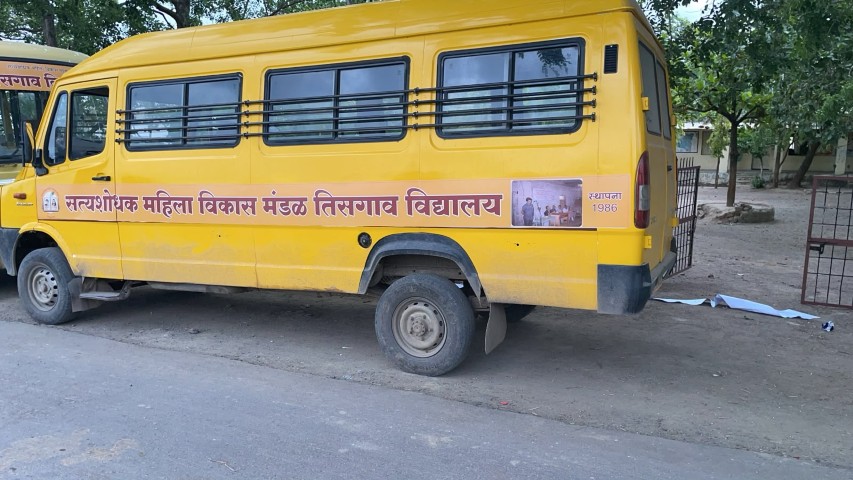
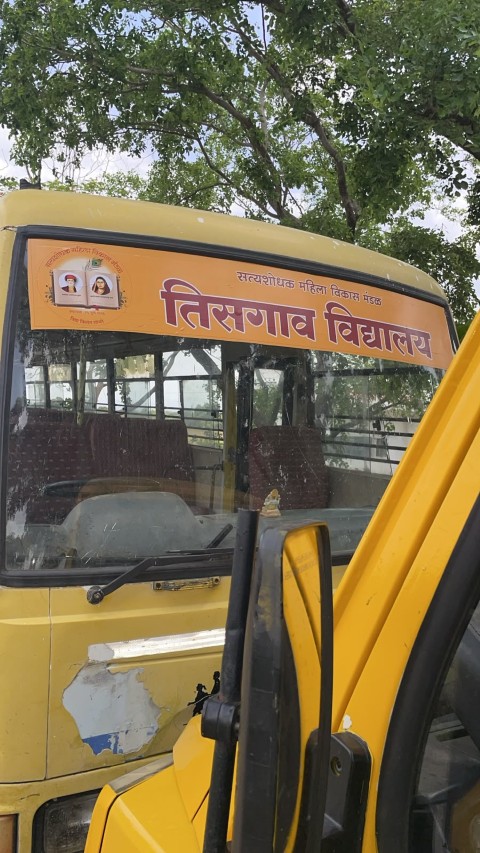
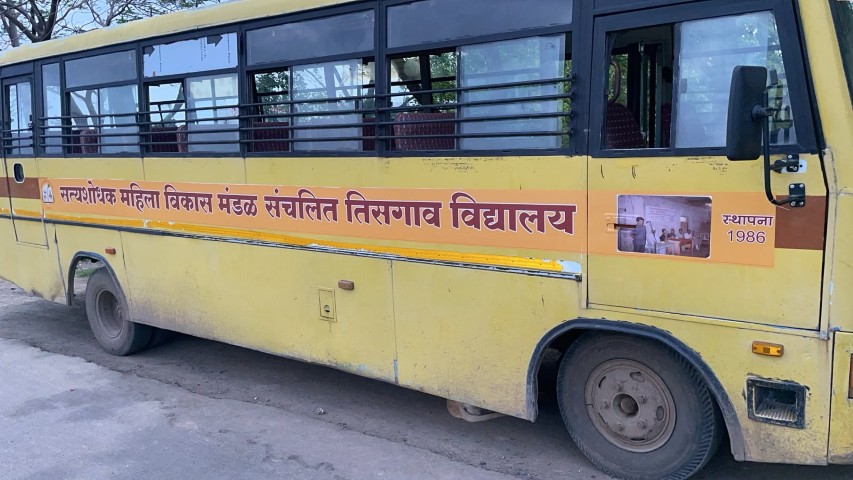
40-seater bus executing 3 fixed routes & 6 trips daily for 8 hamlets
Implementation Approach
Active Since June 2024 40-seater bus executing 3 fixed routes & 6 trips daily for 8 hamlets
- Operational since 07 June 2024.
- A 40‑seater school bus is hired from a vetted vendor (Arihant Distributors) to run three fixed routes, completing six trips per day and connecting all six identified villages with the school.
- Routes and timings are planned in consultation with school authorities to align with school hours, ensuring door‑to‑school continuity for the most vulnerable students.
📊Observed Impact
85–90% attendance uplift • 100% girl safety • 2 study hours reclaimed daily
Observed Impact
85–90% attendance uplift • 100% girl safety • 2 study hours reclaimed daily
- Attendance and regularity: Average regular attendance has improved to 85–90%, even during heavy rainfall and peak summer months, compared to pre‑project irregularity due to distance and terrain barriers.
- Safety and protection: Girl students specifically report feeling safe and confident to travel daily, leading to better continuity in higher classes and reduced risk of dropout.
- Learning time: Children now save up to 2 additional hours every day, which are used for homework, extra classes and co‑curricular activities instead of long walks to and from school.
- Health and well‑being: Reduced physical strain and exposure to harsh weather has lowered daily fatigue; children arrive in class rested, hydrated and ready to learn.
- Focus and behaviour: With a structured, supervised commute, students face fewer distractions and unsafe influences on the way, helping them stay focused on academics and positive peer groups.

SDG 4: Quality Education
Ensuring regular school attendance and better learning conditions for tribal children from remote villages.

SDG 10: Reduced Inequalities
Prioritizing landless, low‑income tribal households and narrowing gender and rural–urban gaps in access to schooling.

Project History: Delivering on Our Promises
Since June 2024, Satyashodhak has maintained 100% transparency. Below is the audited performance and donor support data for our previaous academic cycles.
Overcoming the Geography of Exclusion

The Walking Penalty
- 4.2 to 7.9 km Daily Walking: Children navigate steep, unpaved forest trails back and forth every single day.
- Monsoon Mud Traps: Monsoon rains turn tracks into 1–1.5 ft deep mud filled with thorny bushes.
- Chronic Fatigue & Time Poverty: Over 2.5 hours lost daily in transit, leaving children physically exhausted.
Safety & Dropouts
- Zero Public Transport: No state transport ('Red Bus') or private options exist in these remote hamlets.
- Wildlife Risk: ~10% of the daily walking route traverses active leopard habitat and dense brush.
- 80% Girl Student Dropouts: Safety risks along isolated routes force 8 out of 10 tribal girls to drop out.

2+ Years of Audited Operational Legacy
Since June 2024, Satyashodhak Mahila Vikas Mandal has delivered uninterrupted transport service.
School Bus 2026–27
⏱️ 2026 Fleet Time Table & Route Synchronization
🚌 Bus No. 01
109 Students Total| Route Details | Dist. | Time | Count |
|---|---|---|---|
| Tisgaon Vidyalay ➔ Nirgudi / Bhillwadi | 7.9 km | 8:00–8:30 AM | - |
| Nirgudi / Bhillwadi ➔ Tisgaon Vidyalay | 7.9 km | 8:30–9:00 AM | 55 |
| Tisgaon Vidyalay ➔ Ghusurtanda / Nimdongari | 7.6 km | 9:00–9:30 AM | - |
| Ghusurtanda / Nimdongari ➔ Tisgaon Vidyalay | 7.6 km | 9:30–10:00 AM | 54 |
| Route Details | Dist. | Time | Count |
|---|---|---|---|
| Tisgaon Vidyalay ➔ Ghusurtanda / Nimdongari | 7.6 km | 3:30–4:00 PM | 54 |
| Ghusurtanda / Nimdongari ➔ Tisgaon Vidyalay | 7.6 km | 4:00–4:30 PM | - |
| Tisgaon Vidyalay ➔ Nirgudi / Bhillwadi | 7.9 km | 4:30–5:00 PM | 55 |
| Nirgudi / Bhillwadi ➔ Tisgaon Vidyalay | 7.9 km | 5:00–5:30 PM | - |
🚌 Bus No. 02
50 Students Total| Route Details | Dist. | Time | Count |
|---|---|---|---|
| Tisgaon Vidyalay ➔ Kautgaon | 4.2 km | 9:00–9:30 AM | - |
| Kautgaon ➔ Tisgaon Vidyalay | 4.2 km | 9:30–10:00 AM | 50 |
| Route Details | Dist. | Time | Count |
|---|---|---|---|
| Tisgaon Vidyalay ➔ Kautgaon | 4.2 km | 4:00–4:30 PM | 50 |
| Kautgaon ➔ Tisgaon Vidyalay | 4.2 km | 4:30–5:00 PM | - |
đź’ˇ Time Lag Optimization: Running Bus No. 02 simultaneously on the Kautgaon loop ensures all 179 students arrive before 10:00 AM school assembly without waiting fatigue.
🎬 2026 Dual-Fleet Operational Plan Video
🖼️ 2026-27 Fleet Preview Gallery (Auto-Scrolling)

2026–27 Strategic Transformation: "Zero Waiting Lag"
By deploying Bus No. 01 and Bus No. 02 in tandem, we eliminate time lag between morning pickups, guaranteeing every child arrives in class rested and ready to learn.
Capital & Operational Expenditure
A. One-Time Capital Expenditure (CapEx Request)
| Line Item Description | Specification / Quotation Basis | Amount (INR) |
|---|---|---|
| 40-Seater Commercial School Bus | Heavy-duty chassis built for rough rural terrain | ₹ 28,58,000.00 |
| RTO Registration & Statutory Charges | Official RTO commercial school bus registration | ₹ 35,000.00 |
| Commercial Vehicle Insurance | 1-Year Comprehensive Insurance Policy | ₹ 55,000.00 |
| Safety & Tracking Accessories | GPS Tracking, CCTV, First-Aid Kit & AMC Setup | ₹ 35,000.00 |
| TCS (Tax Collected at Source) | Standard 1% Statutory TCS | ₹ 28,580.00 |
| TOTAL ONE-TIME CAPEX INVESTMENT | ₹ 30,11,580.00 | |
B. Post-Acquisition Annual Operating Expenditure (OpEx)
| Expense Head | Monthly Operational Specification | Monthly (INR) | 11 Months Total (INR) |
|---|---|---|---|
| Commercial Driver | Certified Commercial Heavy Vehicle Driver | ₹ 10,000.00 | ₹ 1,10,000.00 |
| Fuel (Diesel) | ~63 km/day @ ₹96/L (Efficiency 7 kmpl) | ₹ 22,464.00 | ₹ 2,47,104.00 |
| Scheduled Maintenance | Routine periodic servicing & spare upkeep | ₹ 2,000.00 | ₹ 22,000.00 |
| TOTAL ANNUAL POST-PROCUREMENT OPEX | ₹ 34,464.00 | ₹ 3,79,104.00 | |
Institutional Co-Funding & Ownership Commitment
To ensure long-term operational sustainability, 100% of the teaching and non-teaching staff of Tisgaon Vidyalay voluntarily pledge 5% of their basic pay (contributing ₹37,552.00 monthly) toward ongoing operational fuel and maintenance. This internal commitment guarantees local project stability.

1st Year (2024-25)
The Story: We proved it was possible. We took 130 children out of the 2-foot mud and put them into a safe bus.
Key Victory: Successfully navigated the treacherous routes where even tractors struggle.
Project Total Budget : ₹ 5,77,500.00

2nd Year (2025-26)
The Story: Consistency is our hallmark. Despite record rains, the bus didn’t stop for a single day.
Key Victory: Achieved a “Zero Dropout” rate for girls in the cluster. 100% safe transit.
Project Total Budget : ₹ 7,35,000.00
Testimonials Beneficiary videos - Project "School Bus 2024"
Ms. Dipali Rajendra Chavhan
At.Post. Ghusur Tanda, 9th class
Abhishek Chavhan
At.Post. Kautgaon, 9th class
Ms. Aboli
At.Post. Thakarwadi, 7th class
Class 9th and 10th Students of Tisgaon Vidyalay
Ms. Nandini Rathod
At.Post. Ghusur Tanda, 8th class
Frequently Asked Questions
1. What specific problem does "The School Bus" project solve?
2. Who exactly benefits from this project?
3. What measurable impact metrics can corporate donors expect for M&E reporting?
- Attendance Stability: Sustained year-round classroom regularity at 90–95% (up from a 60% baseline).
- Girl Child Safety & Retention: 100% incident-free transit record and zero girl dropouts in the cluster.
- Learning Time Reclaimed: ~682 study/rest hours saved per child annually previously lost to transit fatigue.
- Verification: Daily digital attendance logs, GPS mileage tracking, and parent safety perception surveys.
4. Can our company donate a bus in-kind instead of transferring funds?
5. Who owns and operates the donated vehicle, and how are routes set?
6. Are corporate contributions eligible for tax exemption under Section 80G?
7. Can we fund only a portion (e.g., fuel or driver salary) instead of the full budget?
8. What safety protocols are active for female students and younger children?
- Designated female attendant/peon present on all routes during every shift.
- Dual-camera CCTV recording, GPS real-time location tracking, and emergency contact protocols.
- Vetted commercial heavy-vehicle driver with clean background verification.
- First-aid equipment, speed governor installation, and door-to-school pickup points.